Category: Books

  • Fictional relationships that have turned me to goo

    Fictional relationships that have turned me to goo

    You know how sometimes you become too invested in a fictional couple? That’s me, currently. And while I have wild ambitions to fill this blog with smart posts that closely analyze media and show that I am capable of deep and nuanced thinking…uh, instead here’s a list of some of my favorite fictional couples!

    In case you were wondering, the cause of my current case of distraction is Our Flag Means Death on HBOMax. It’s a ten episode season of half hour episodes and is a goofy, funny little pirate show that somehow makes you really sad at the end? Give it a try and then harass HBO to renew it for a second season.

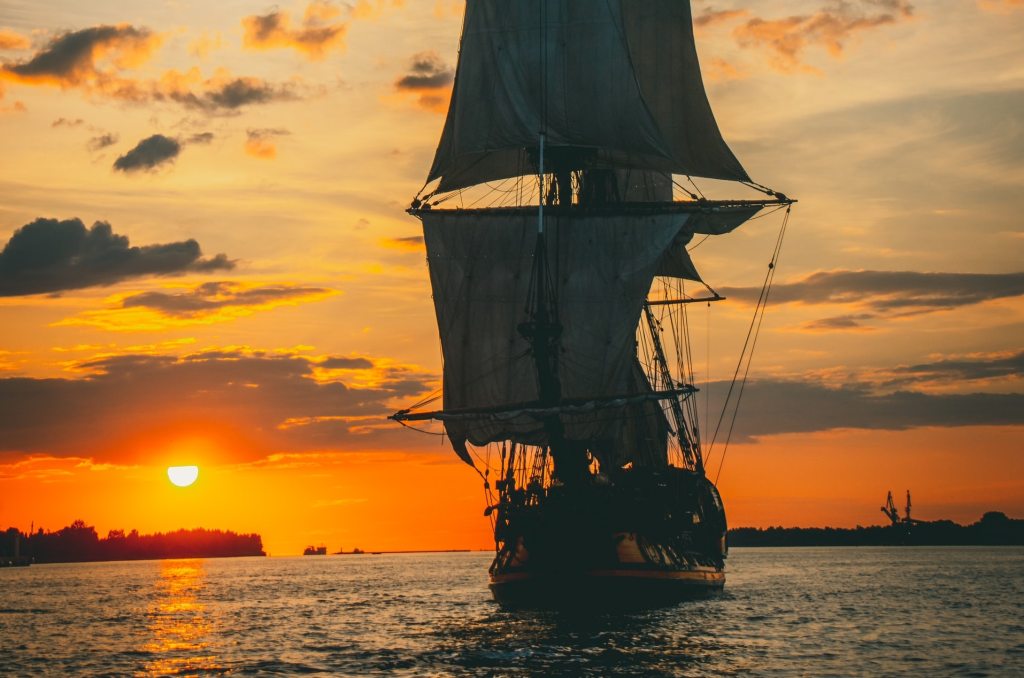
    An eighteenth century ship sails on the ocean during sunset
    The ships are comin’ in, captain! The relationships, that is. (Photo by Raimond Klavins on Unsplash)

    Or check out this very non-comprehensive list of some of my favorite fictional couples.

    A quick aside: This list was mostly for what was top of mind, but I did decide to do a quick Google search for some all-time great couples just to see if I was forgetting anything glaring, and some of the results were wild. And proof that not enough people have actually read classic novels. (Listen, Scarlett and Rhett are a very interesting couple but they are not goals! Cathy and Heathcliffe is the weirdest relationship goal you could ever have, please don’t! Who included Pip and Estella from Great Expectations? That’s obscure and also wrong! Also, the correct ship from that book is clearly Miss Havisham and her old wedding dress. If you would like more classic novel relationship hot takes, let me know and I will provide.)

    All right, with that out of the way, here is the list in question:

    Television

    David and Patrick – Schitt’s Creek

    Have I had out of body experiences because this particular relationship on this particular show makes me so damn happy? I’m pretty sure I have.

    In general, Schitt’s Creek is a show absolutely worth watching and anyone who has spent five seconds on the internet and been inundated with nonstop memes knows this already or is too annoyed to give the show a chance.

    Almost every last character on this show is an absolute delight. But David might be my favorite? And his relationship with Patrick is one of my favorite things in the history of scripted television and on my initial watch definitely made me cry at least thrice.

    Josh and Donna – The West Wing

    Okay. I know this is kind of problematic. Josh is sort of a huge asshole and flirting with the person who works for you is complicated on a whole number of levels. BUT Bradley Whitford and Janel Moloney have a lot of chemistry and I was still happy they ended up together.

    This is one of my early ships from middle school or something so my feelings about the The West Wing are considerably more complicated these days. Still! They are a formative fictional couple for me. I enjoy watching this emotionally constipated man realize he’s been in love with someone for like five years.

    Leslie and Ben – Parks and Rec

    Another workplace relationship but this one I still fully endorse. Leslie Knope is one of my favorite characters on television in general and Adam Scott is incredible? (If you haven’t seen Severance, you should. He is startlingly good in it.) I picked up this show when it was around season four, and I remember absolutely tearing through it at every free possible moment not just because it’s very good but also because I was dying to see the Leslie and Ben thing play out.

    Impossible not to love a “they have so much chemistry and really want to get together but are trying not to because of other reasons but can’t stay apart” relationship. Inject it into my veins.

    Books

    Darcy and Elizabeth – Pride and Prejudice

    This is my most basic opinion, but it’s not wrong. Also, all the classic literature lists that included Heathcliffe and Cathy as an iconic relationship but not Darcy and Elizabeth…huh?

    I personally like Jane Austen (very brave, I know). Her sense of humor strikes me just right and her characters are so fun to watch bounce off each other. And that includes the main couple in this book. Darcy’s first proposal and Elizabeth’s subsequent rejection of him his an incredible scene that should be put in a museum. The scene at the end when Elizabeth tells Darcy’s aunt that she and Darcy are definitely NOT engaged but she will also not agree to never become engaged to him just because she’s pissed off? Chef’s kiss! I love a man who comes back to propose because he heard you told off his mean, rich aunt.

    Also, yes, Colin Firth is the best Mr. Darcy and his smolder is very real.

    Remus Lupin and Sirius Black – Harry Potter

    My feelings toward this series have become pretty complicated in the past few years largely due to the author of said series being a mean person. In order to include the series, I felt it only fitting to push my favorite relationship of the series even though it has been explicitly rejected by the author. I don’t care. She can shut up because she is wrong.

    Lupin and Sirius 4ever.

    Yes, this still holds true if you are a Lupin and Tonks fan. People can be bisexual!

    Just, come on, the friendship, the hiding, the betrayal, the reunion, the cohabitating, the joint Christmas present? I wrote a lot of fanfiction back in the day. Don’t fight me on this.

    Achilles and Patroclus

    I guess Achilles and Patroclus are technically a fandom ship because The Iliad never outright said they were a couple but um…I consider them canon. (And when it comes to Greek mythology, what really is canon, anyway? The Iliad is basically fanfiction.)

    Because I am a History NerdTM and a School NerdTM, my support for these two as a couple started in high school when I read The Iliad for the first time in Latin class. (In case you were curious, the previous sentence is a good encapsulation of who I am as a person.) And I have been shipping them ever since.

    Saying this makes me a bit of an Achilles/Patroclus hipster, since I was about them many years before Madeline Miller wrote The Song of Achilles, but I don’t judge. Also, The Song of Achilles? Good book.

    I don’t really recommend reading The Iliad unless you want to read a lot of gruesome battle descriptions and lists of how people are related to each other. But I do recommend you consider that after Patroclus was killed by Hector, Achilles had an all out grief fest, hosted funeral games, killed like half the Greek army, and then murdered Hector and defiled his body because of how upset he was. Just consider it.

    Also this:

    A black cloud of grief came shrouding over Achilles.
    Both hands clawing the ground for soot and filth,
    he poured it over his head, fouled his handsome face
    and black ashes settled onto his fresh clean war-shirt.
    Overpowered in all his power, sprawled in the dust,
    Achilles lay there, fallen . . .
    tearing his hair, defiling it with his own hands.

    Book 18 of The Iliad

    It is worth mentioning Achilles and Patroclus both brutally murder their fair share of people on the field of battle. So, like, iconic couple, but also…it’s complicated.

    Red and Blue – This is How You Lose the Time War

    This book is extremely good. I listened to the audiobook and the narration was also extremely good. And it’s short! Now I love a long book, but a novella composed of love letters opponents write each other during an intergalatic war that involves time travel is one of the best ideas anyone has ever had.

    There was a time when this book was getting recommended a lot and some people thought it was overhyped. But those people are wrong. I just love all the ways these characters find and consume letters to each other (sometimes literally consuming the letters in the process). It is somehow sweeping and epic and also deeply personal and just really lovely all around.

    Movies

    Danielle and Henry – Ever After

    This movie has been a favorite of mine since I first saw it in theaters when I was in the third or fourth grade. And I have watched it so many times since that I basically have the entire thing memorized. And it is still so good! And so quotable.

    Danielle and Henry first meet when she throws an apple at his head to stop him from stealing her father’s horse. Then, during their second meeting, she tells him off for being a rich boor. And he is about it. I love how this relationship centers around Danielle unabashedly speaking her mind, even when that involves insulting Henry, and he cannot get enough of it. I also like that he’s a rich brat and Danielle helps expand his worldview.

    The actors have really good chemistry and the relationship is believable. And all the side characters are so fun! The entire move is gold.

    Dido Belle and John Davinier – Belle (2013)

    Anyone else other than me remember this movie? I own it on DVD and watch it at least once a year and I love it a lot. In fact, despite being an aforementioned History NerdTM, I refuse to read about the real history of Dido Belle because I like the movie world and I suspect history is not as good. (Sorry, history, you’re a real one.)

    John Davinier is one of the most earnest men written into existence, and this movie is what helped me recognize that I am super into earnest men as characters and love interests. There’s a scene where he yells at Belle’s uncle in a carriage about how sincerely he loves her and every time my entire body threatens to explode with feeling.

    Don’t know what this says about me, but I recommend checking it out.

    Evie and Rick – The Mummy (and The Mummy Returns)

    These movies are good. There I said it. And Evie and Rick are a perfect power couple. The squabbling and coming together in the first movie is good and then the married couple wild for each other in the second movie is great! I love to see happily married couples on the screen (side shoutout to Thin Man movies for this by the way), even if they are chaotic and horny in weird situations.

    As a history nerd librarian, Evie is basically life goals and Rick is a perfect himbo. How can you not support the two of them?

    It also does the fun one-two punch that the Alien movies do, where the first movie is a sort of horror (liberally sprinkled with clips) and the second is mostly just action adventure (also with many quips). On a related note, I refuse to acknowledge that the third movie exists.


    Give me your opinions on these couples or share your own faves. Let me know if you would like some hot takes on classical literature. Let’s pretend the world is not terrifying and is instead gentle and comforting for a moment.

  • Read more banned books

    Read more banned books

    It’s Banned Books Week! Or, maybe you’re reading this at some point in the future and it’s no longer Banned Books Week. Easy solution: Live your life like every week is Banned Books Week.

    In the past, I have often celebrated this auspicious occasion by reading a banned book. When I used to do a book podcast (um, I used to host book podcast called Novel Ideas, if you want to listen to some old book takes), my brother and I would go look up recently challenged books and read them.

    On the one hand, if you take this approach, you get to read a lot of great books! On the other hand, it’s depressing and predictable what’s going to make the list. If a book has LGBTQ+ content it’s like a million times more likely to be on the list. Also, books that deal with important but dark subjects get put on there a lot because the content is so shocking and terrible! But the point is to talk about a difficult subject? And how can we talk about difficult subjects without talking about them?

    It probably goes without saying, but I am not a fan of banning books or trying to dictate what anyone reads. When I was a kid, my mom let me read pretty much anything, even if it was out of my age range or above my reading level. (This is how I read The Fellowship of the Ring in the fifth grade and didn’t understand it at all and then read Dracula in the seventh grade and what the hell. My mom truly let me read whatever.) I got to experience some really cool books this way! I also read some stuff that went way over my head and I didn’t realize just how much until I read the books again at an appropriate age.

    Woman reading green book seen through seen through circular opening in stacked books.
    I was going to make a joke about someone knocking that stack over, but I don’t think anyone will ever want to read any of those books. (Photo by Ying Ge on Unsplash)

    I’d also like to say that this isn’t the sort of position where I don’t like it when certain books are banned but am okay with it in other contexts. I do not approve even when stupid books I don’t like are challenged. Reading a stupid book I don’t like has often made me annoyed, but I think there’s value in reading them nonetheless. Reading opens you up to new worlds and perspectives and helps you learn more about what you like and what you think. And if that book challenges your set worldview? Good.

    Reading dumb stuff you don’t like sometimes can help you clarify your thinking more. Maybe it helps you better articulate why you don’t like certain things, maybe it helps you think more critically about why you don’t like certain things. Whatever the result, the process is good and it helps you grow.

    What’s not great is looking at list of what a book contains and claiming that it’s going to corrupt young minds. That shit is tired. Scandalized by sex? The internet and television both exist and both of those things contain sex, so it’s not like teens will never hear be exposed to sex unless they read Lady Chatterly’s Lover or something. Violence is all over television too. The American Library Association points out that some of the most frequently challenged books contain diverse content. I mean…gay people exist and so do Black people and banning a book won’t change that.

    Also, can we please stop trying to ban books that teach children about their bodies and where babies come from? They need to get the information from somewhere and a reliable book with good information is much better than a parent stammering through a half-assed explanation. We all have bodies! It’s okay to learn about them.

    Reading new books will challenge you, will teach you to think about different people and points of view, will introduce you to new ideas, will generally make you more empathetic, more open, and more willing to embrace nuance.

    I’m incredibly biased because I love to read, but even if you think the above is a little too rosy, you have to admit that a good book can make you have a lot of feelings and a lot of thoughts and that’s a good thing.

    With all that said, I encourage you to read some banned books! Maybe some that have been challenged recently or are frequent targets. Maybe something like…

    Speak by Laurie Halse Anderson

    I had to include this because Speak was one of the most challenged books in 2020 and the thought that a whole swathe of people saw a book that is literally about a young girl trying to find the courage to speak out and then decided they wanted to silence it is really just a whole level of irony I wasn’t prepared for.

    The book does deal with sexual assault, so take that into account. But I remember when I first read this book in high school, it blew my entire mind. It takes the issue really seriously and shows the long-lasting effects of assault and how people’s responses to it often continue to harm victims.

    Apparently one of the reasons it was challenged was because “it was claimed to be biased against male students.” Umm, only those who commit sexual assault. Which, is probably an okay reason to be biased against someone. Maybe read the book next time?

    And Tango Makes Three by Justin Richardson and Peter Parnell

    This is a cute picture book features two male penguins at a zoo who adopt an egg and when the baby penguin hatches, they have a little family. The story is based around two real life penguins who did something similar.

    The fact that an adorable children’s book about gay penguins nurturing an egg and subsequently a baby penguin is the sixth most challenged book of the past decade really tells you something about society. Not sure what, exactly, but something.

    Read this one to your children out of spite and then feel a little warming in your heart.

    Fun Home: A Family Tragicomic by Alison Bechdel

    A graphic novel and a memoir, this book is a really interesting look into Bechdel’s family and her relationship with her father. It includes a couple surprising revelations about her dad and her own journey to discovering who she is.

    In case you haven’t guessed it already, the book is not called Fun Home because Bechdel grew up in a really fun home. But certainly one rife with secrets and frustrated desires.

    The Hate U Give by Angie Thomas

    Timely for a whole host of reasons and I’m sure it’s challenged for the exact reasons it’s relevant. I liked this book and thought it did a good job tackling a tough topic and making it relatable. The book is definitely YA and features some of those common YA tropes, but I didn’t mind that so much because of who the intended audience is. It’s a good entry point for adults too, though.

    This book also recently was made into a movie, which I didn’t see, so I can’t vouch for its quality. But the book is definitely worth checking out.

    Beloved by Toni Morrison

    This book is wild and dark. It has lots of metaphorical hauntings and one haunting that seems to be pretty literal. At times this one takes turns that will leave you scratching your head, but ultimately it faces the brutal history of our nation and grapples with how the past can cause ongoing trauma that people carry with them for a long time.

    Quick aside: I recommend reading Toni Morrison in general, but if you are an audiobook person, try to find one that she has narrated! Her voice is lovely and soothing and listening to her read her own work made a lot of the writing style come alive for me in a way it didn’t when my own clunky brain was trying to process it.

    Awakening by Kate Chopin

    In my junior year of high school we had the option of reading a couple different books, and I specifically chose Awakening because it had created such a scandal when it was first published for featuring a woman who cheated on her husband. Spoiler alert: This book is not lurid and contains no sex. It’s all implied and vaguely talked around. Seventeen-year-old me was extremely put out by this fact.

    Reading the book again years later, I was less annoyed by the lack of sex. Instead, I was struck by the fact that the main character had complicated feelings about her children, and I thought that was really cool. She’s allowed to be unhappy in her marriage, not because her husband is a terrible, abusive human being, but just because she doesn’t like him very much. And she’s allowed to be ambivalent about being a mother. Those are not things you get to see very often!

    Spoiler alert: She is not allowed a happy ending and gets punished for her transgressions. Thank goodness they don’t make us all walk into the sea when our children give us complicated feelings.


    This list is definitely not exhaustive. I’ve read other books on the banned and challenged lists and enjoyed them! I’ve read some books on those lists and not liked them much at all. Consider checking out these 100 most challenged books from the last decade. Give one a try. Or if you’re just looking for some books from different perspectives, you can see some of my recommendations for Juneteenth and Pride Month.

    It’s okay if you don’t like one. Or if you don’t want to read a certain entry. We can all choose what we want to read. And it’s okay if those things are different than what other people want to read.

    Have you got a favorite banned book? Let me know!

  • Should we demand accuracy in our historical fiction?

    Should we demand accuracy in our historical fiction?

    I’ve experienced this thing several times in my life and I’m curious to know if it’s familiar to anyone.

    When I don’t know much about a subject, I’ll have a general opinion about it. Then, the more I learn about that subject, I’ll learn nuances I didn’t know before and my opinion will take a sharp left turn. Then, as I learn even more, I mellow out and veer back in the direction of my original take.

    Portrait of a Dutch woman from the seventeenth century in dark shirt and large frilled collar
    She is judging the shit out of your movie. (Photo: Painting of a woman from the Rijksmuseum in the Netherlands. Public domain.)

    For example, historical accuracy in works of fiction. I’ve always loved and been interested in history and liked watching period dramas, but in my younger days I didn’t think about it too deeply. If I heard something wasn’t accurate, I might briefly pause to think, “Huh” and then go about my day.

    Then, as I started taking more serious history classes and seeing movies and TV depicting topics I knew stuff about, the issue of accuracy suddenly became much more important to me. I felt superior for knowing when things were inaccurate. I liked nit picking all the bits and pieces and reading more into the actual history.

    While I still like reading into the actual history, I don’t care as much about all the details of a story being fully accurate anymore. Stories are stories for a reason and sometimes you have to fictionalize stuff. There are a lot of reasons to introduce inaccuracies into your narratives and many of them are fine.

    It’s fine. Really, it’s mostly fine.

    Let’s explore.

    Real life doesn’t follow a neat narrative arc

    One of the big real historical reasons people and events get messed with in books and movies is that they have to get messed with to make the story work.

    If you’re writing a story, you typically want it to be compelling. That means character growth and an ending following a narrative climax and a timeline that makes sense for a limited runtime or number of written pages.

    Two battles actually took place ten years apart or a piece of legislation was actually signed three years after the fact or the king had five close advisors instead of two?

    Well, you try cramming in a time skip that makes sense or fully developing five dudes named Thomas so the audience doesn’t get confused and then report back.

    Simplifying a story is often the choice that makes narrative sense. It may be sad for the weird nerds who have studied the primary documents, but there are only so many of us in the world.

    Changes that are made to help make the story work are fine with me. Unless those changes are made to make the story rote and stale, then I take issue. (More on that below.)

    There needs to be a connection for the audience

    History is a really fascinating and tricky subject. Learning about how people used to think and behave can shock you, either because people back then are so similar to the way people are today or some of the things people used to think are so different than the way we think now. It’s kind of a weird contrast because sometimes people will do things you totally recognize (drawing graffiti dicks on things) and then do something baffling (shun someone for a seemingly innocuous religious belief).

    Because of this, sometimes the story has to fudge history a little to help the audience relate the characters. It’s why you end up with a lot of historical fiction featuring women who want to make love matches and be the equal of their husbands and then start spouting some pretty suspiciously feminist stuff.

    Sometimes, also, historical stories can serve as interesting metaphors and comparisons to modern life (science fiction is the genre most notorious for critiquing the present while talking about a different time, but it doesn’t own the concept!).

    Marie Antoinette is a great example of this. A lot of the costumes and events are pretty historically accurate but the important thing about this film is not exactly what happens in it. Who cares if all the actors are speaking in their regular voices and not doing accents? Who cares if there’s a modern soundtrack? Sofia Coppola is helping the audience connect by showing how Marie Antoinette and her buddies acted in a way that’s not entirely different from entitled young people in the modern day. And it’s an approach that I think works overall.

    We don’t really know exactly how stuff was anyway

    We know written language (sometimes) and art (sometimes) and customs (at least some of them). We have access to the artifacts that have existed to today. But not everything made it. And when you can’t interact with the people in their own setting, you can’t know exactly how everything worked.

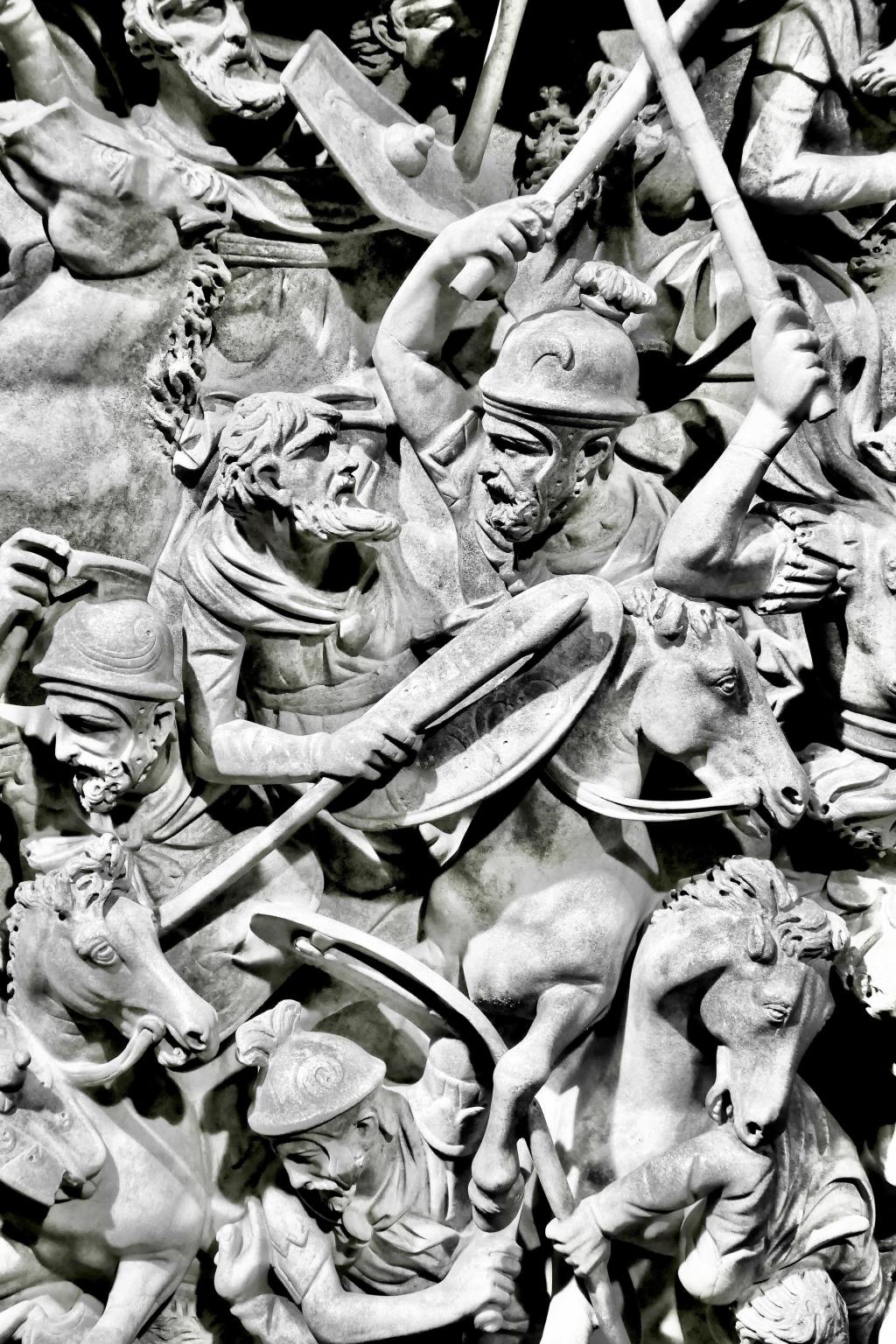
    Stone relief depicting Roman soldiers and horses in the midst of battle
    “What’s up?” “Oh, you know, just wondering if this battle could have been carved more accurately.” “Cool. I’m gonna stab you now.” “Dang.” (Photo by Massimo Virgilio on Unsplash)

    We have our best guesses, but we don’t know everything. Drop a historian back into the time they’ve studied for years, and they’ll immediately find things they had thought about incorrectly. (This is one of the things I love about Doomsday Book by Connie Willis. How much the historians get wrong.)

    Think about all those beautiful marble statues from ancient Greece and Rome. When we watch movies and TV shows, these statues are all pristine white, just like they are today. But it’s been discovered that these statues were actually covered in layers of paint and it’s just been such a long time that most of that paint has chipped away. Are you going to watch a movie set in ancient Rome with painted statues any time soon? Probably not. People still generally think of the white statues when they think about the time. It’d probably cause too much confusion for the audience. So it’s inaccurate. Does that make it wrong?

    Keep in mind too that it’s impossible to eliminate bias. That applies to the people who wrote about historical events contemporaneously and the historians who came along afterward and interpreted those events and primary sources.

    All that said, I would like to say that there are still some things that stick in my craw. I’m not willing to blanket forgive all inaccuracies.

    Following tired tropes doesn’t make a better narrative

    Sometimes stories are changed to make more narrative sense. Sometimes they are changed to fit into a set formula. This I do not like. People are messy and complicated and putting them into a paint by numbers script doesn’t do anyone any favors.

    Biopics are horrible about this. Fitting a person’s entire life or entire career into a two hour movie is really difficult without completely flattening the person out. Why do we feel the need to this? Why can’t we show certain moments or key events and then lean into the weirdness and individuality that makes people who they are?

    These kinds of changes are especially egregious when the person being covered was an outside the box thinker or actor but the movie about them is being forced into a narratively traditional box. I’m thinking of movies like Bohemian Rhapsody that do the real person a huge disservice. (Also The Imitation Game. Why did I have to watch movies about queer men that only showcased them having romantic relationships with women.)

    I get making changes to fit a smart and compelling narrative. I don’t get making an interesting person’s interesting life boring and formulaic. That sucks.

    Sometimes the real history is more interesting than the fiction

    When looking up the history behind a movie before, I’ve discovered sometimes that what actually happened was far more interesting that whatever the movie did. And sometimes I have to wonder why the more interesting, real event wasn’t included.

    One of my go to examples for this is Gladiator. Commodus was a bit of a wild card emperor who allegedly dressed up as a gladiator and fought in the games. I overall think his character is done well in the movie and that Joaquin Phoenix is probably the best part of the film.

    And I guess dying in the arena sort of fits with the real guy and it makes sense for the movie. But in real life? Commodus was strangled in a bathtub by his wrestling partner Narcissus. And this was after an initial failed assassination attempt to poison him.

    Uh, what! That’s wild. Work that into the movie, dude!

    In addition, I think it’s worth pointing out who gets their story told at all. There are so many incredible interesting historical figures out there who have never had a movie made about them because they are the sort of people that tend to get overlooked. Instead of another biopic about a white guy who did a thing, could we get more movies about awesome bisexual sword fighting nuns/opera singers? (Julie d’Aubigny ruled. Make a movie about her!)


    Ultimately, is it an entertainer’s job to present historical people’s lives and historical events accurately?

    I’m not convinced. While a show or movie might be someone’s only reference point to history and it can certainly warp their view of the past, popular media can also serve as jumping off points for people to dig into these subjects more.

    I’m less concerned about whether a dress has the right flounces or a battle takes place the right year than I am about producers falsifying stories to the point where they can become directly harmful. (Big side eye to every story that whitewashes real people or pretends people of color didn’t exist several hundred years ago.)

    In a lot of cases, inaccuracies can be annoying for someone who knows a lot about the subject, but I guess you just kind of have to get over it. Nit picking something to do death is not really the most helpful form of critique.

    To crib a quote from our buddy Maximus, it’s more important whether you’ve been entertained.

    Don’t worry about it so much!

    Unless it’s a Mel Gibson movie. Drag him through the mud.

  • Why I write

    Why I write

    Recently, I had the delightful experience of being on the podcast What People Do with the ever wonderful Brendan Howard (listen to my episode!). We talked about writing and all the different forms of it and some of the questions he asked me got me thinking…why do I write, exactly?

    Aside from the fact that I’ve committed myself to a blog and if I don’t pound something out on a semi-regular basis, I am filled with a deep sense of shame.

    It’s hard to pinpoint. I don’t know that there are concrete reasons. It essentially boils down to: I like doing it, I think I’m pretty good at it, and it’s really satisfying to get something down.

    But it’s not like I have to write. I’ve gone through long stretches where I haven’t written much, if at all, and it didn’t make my life way worse. It definitely left a small hole and made me question my identity as a writer a bit, but I didn’t have a full out crisis.

    If I suddenly decided to stop writing forever, I don’t think it’d hurt anyone. There isn’t a crowd out there clamoring for me to produce content. (At least, I don’t think so. Are you clamoring for me to produce content?)

    But there’s got to be something. I mean, I keep doing it. And often simply for personal fulfillment. I amuse myself with my stupid jokes and that’s usually enough for me.

    Still, I think it’s a useful exercise to try to pinpoints the whys behind my need to be creative. So here’s an attempt at that.

    I love to read

    This is sort of a basic observation, but most authors are avid readers. I have only ever met one aspiring writer who told me they didn’t read, and when he told me that I immediately gave him reading assignments. (For context, I was tutoring him and he asked for advice on how to be a better writer. I won’t randomly assault you in the street if you don’t read.)

    For one, reading helps you figure out what other writers do that you really dig. It helps you figure out writing tactics you don’t like. It helps you become versed in tropes, which teaches you the appropriate times to break or upend those tropes or really lean into them. Reading is incredible for a lot of reasons, and I wholeheartedly embrace the advice that if you want to get better at writing, you should probably read more.

    Also, it makes sense to me that if you love to read, then you would want to craft some kind of written text that other people will love to read. Readers love to share with other readers.

    I like making other people happy

    I don’t know if love languages are a bad thing to reference, so sorry if they are, but I’ll be damned if my love language isn’t acts of service. When people are in a bad way, my mind immediately goes to what I can do for them. What can I give or provide that will make them feel better? Usually the answer to that question is baking them cookies. But in my younger days, I used to write friends short stories for their birthdays and other holidays (they would give me a prompt and away I went.)

    Last year, right when lockdown was looming imminently, I started a newsletter where I sent out a chapter of the book I was writing every day. This was partially to force me to stay on top of my writing, but it also came from a place of trying to give people something comforting to expect in their inbox each day.

    When someone does read what I write and report back that they loved it or it made them happy, I’m so glad that it touched them in some way. You give me feedback that you like my writing, and I’ll go out of my way to make more writing happen for you.

    Dirt path leading through a forest of tall trees
    Here’s a metaphorical image about following your path. (Photo by Matthew Waring on Unsplash)

    It gives me a sense of purpose

    Life is wild and the world is a mess. I’m constantly running around trying to get everything done and falling shorter than I’d like. Not to mention that I have yet to land that mythical job that magically fulfills everything I need in life. (Spoiler alert: These jobs don’t exist. Even the really good ones.)

    Writing gives me a purpose. I might not be changing the world, but this is something I can do for myself. It’s a way I can make something that I think matters. I value words more highly than just about anything. So writing helps me practice what I value, and it gives me something meaningful to do. And to tell others that I do something meaningful.

    I’m becoming a skilled expert

    If you have read more than one article on my blog, you already know that I struggle with perfectionism. But also, strangely enough, writing has never been something I’ve felt the need to be immediately perfect at. I wrote prolifically throughout middle school and it is all absolute drivel that just rips off other stuff I liked. But that never stopped me or disheartened me. I loved doing it!

    I’m now good enough that reading stuff I’ve recently written usually doesn’t (usually) make me cringe, and it’s nice to know that the more I do it, the better I get. That I’ve effectively “honed my craft” for enough years that I’m something of an expert. That I could, maybe…teach other people lessons I’ve learned? I have been paid professionally to write. Like, on some level, I’m a professional writer.

    That’s kind of weird, but it’s also cool. At least I’m good at one of my hobbies, by god! (My other hobby being running, which I am terrible at.)

    It’s fun to see the fruits of your labor

    Finishing a project just feels good. Posting an article, finishing a book, capping off that play. It’s amazing to be done and then to go back and read what you’ve written. You have proof that you did a thing! That is so cool. When I go on a long run, I’m sore, but I have no physical document that shows that effort I made.

    This is a great side benefit. And sometimes when I go back and read something I wrote awhile ago, when some of the details have gotten fuzzy, I’ll come across a clever line that actually makes me laugh out loud. It might be super embarrassing to admit that I can make myself laugh out loud with my writing, but I think that’s kind of neat!


    I don’t know that I’ve really dug all the way down to the heart of why I do this writing thing, but I think these are all pretty good reasons for why I keep doing it. Why I keep setting myself goals and starting books that nobody but me might ever read.

    Really, if nothing else, I hope you take away that it’s good to pursue things you like to do that make you feel good. And it’s okay if those things don’t make you money. It’s okay if you just do something because you like it and you want to do it. Don’t let weird productivity/hustle culture steal your joy.

    And if you feel so inclined, let me know what you love to do. I bet you’re great at it.

  • Should you read The Count of Monte Cristo?

    Should you read The Count of Monte Cristo?

    Maybe!

    It really depends on your tolerance for long set ups and seemingly unrelated events happening. Also, as to be expected with a book written in the 1800s, there is some gender nonsense.

    The book is largely a romp. But it’s a really long romp and sometimes it forgets that it should be romping along and instead starts meandering into asides and anecdotes. At those times, it is pretty boring!

    So here are a couple things to consider when you are considering The Count of Monte Cristo by Alexander Dumas.

    This book is long

    This isn’t really the book’s fault. If you think about the way that writing was done at the time this book was written, it would have been released in a serial format. The modern joke about this kind of writing is that Dickens was paid by the word and that’s why is stuff is so long.

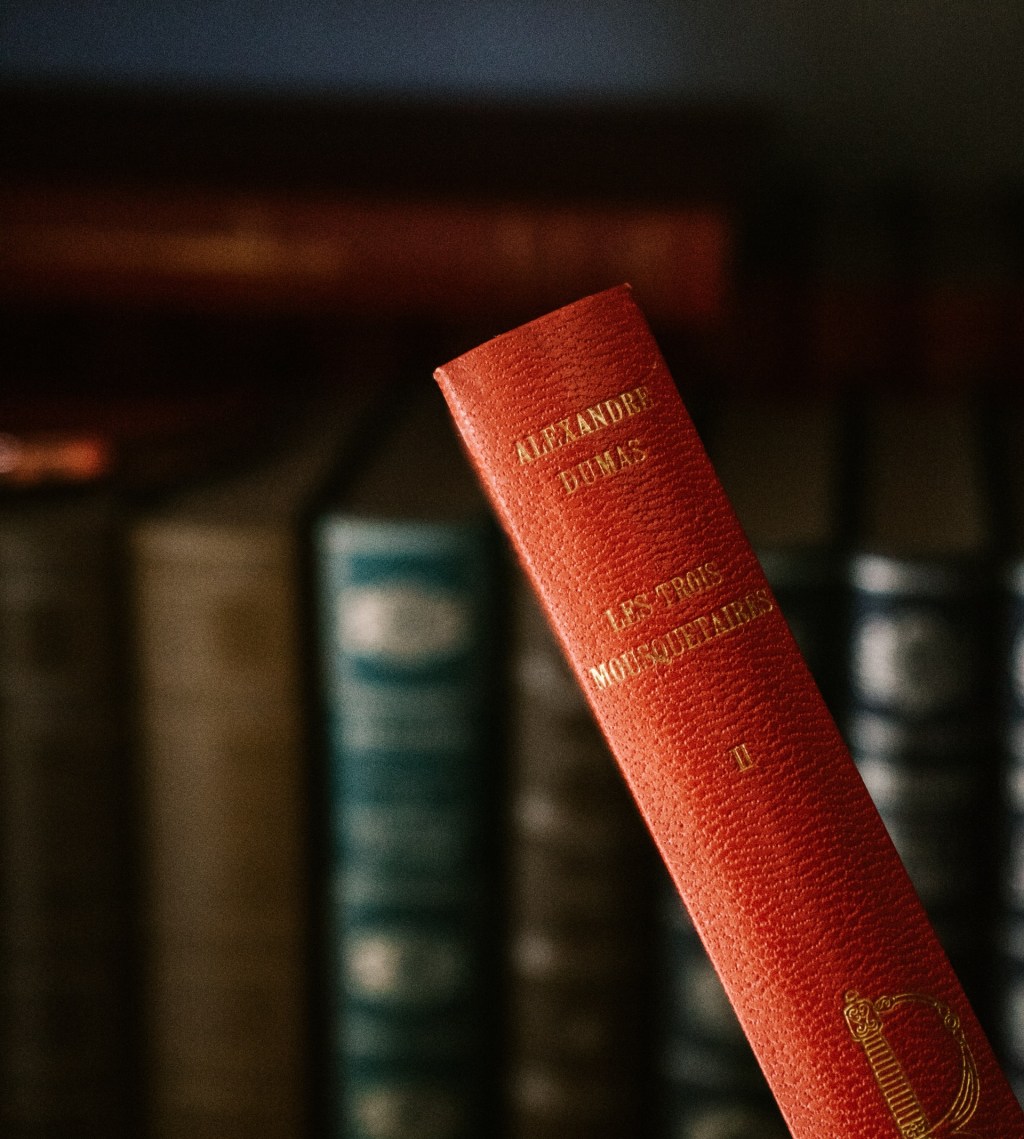
    Wrong book, right author. Note: This is just Vol. 2 of three. (Photo by Artiom Vallat on Unsplash.)

    For reference, a typical audiobook is roughly anywhere between eight and twelve hours long. the audiobook version of Great Expectations is about 18 and a half hours long. The audiobook version of The Count of Monte Cristo that I listened to was 43 hours long.

    For a better reference, in case you are not familiar with how long Great Expectations is, Game of Thrones (the first book in the series) clocks in at almost 34 hours and Harry Potter and the Order of the Phoenix (the longest Harry Potter book) is 26 and a half hours long.

    So. This is a long book.

    I think read the way it was intended, from week to week or month to month in installments, would get rid of some of the drag. When you’re only getting a chapter or a few chapters at a time, you just want to read the next bit. It warps your sense a little of how long plots take.

    When I watch a TV show all in a row that I had previously watched from week to week or when I reread a webcomic that I had read as it was updating, I’m always surprised by how quickly some plots resolve and how others play out. There’s a much different psychology between the two forms of release, and because of that, I hesitate a little to say that the middle part of this book is sometimes bloated, meandering, and boring.

    But, well, we read books all in one go now. And the middle part of this book is sometimes bloated, meandering, and boring.

    The first quarter and last quarter are fantastic

    I say this with the caveat that it helps if you have a little knowledge and historical context. But I think it would still hold up even if you didn’t.

    The first part is all about Edmond Dantes getting set up by a trio of goons who are jealous of him/are too drunk to not set him up (just…roll with it). The plotting goons are successful because the judge who reviews the case has some personal motivations for locking Dantes away. The scene where the trio plots to put Dantes away cracked me up. It was so full of fun characters being ridiculous.

    The scene with King Louis whatever number he was also cracked me up. I don’t know if additional historical knowledge here helps or if everyone finds a king obsessed with trying to translate Plutarch is funny but I laughed.

    The stretch where Dantes is in prison and the escapes is also great stuff. (Spoilers I guess but the book is about a dude getting revenge, so I don’t think is news to anyone.)

    Then at the end after many shenanigans and plot machinations, everything starts falling into place. The plots and plans getting carried out or going sideways are all super satisfying. I found the last part of this book really fun to read and it was fun seeing how everything played out. Especially after slogging through some of the boring stuff.

    There is some weird gender stuff

    It can’t be helped. Some of the way women are written in this book plays out in a way that feels dated to a modern reader. Can we fault Dumas for it? It’s important to note and critique these things, but also, you have to expect it to some extent. If you don’t want to deal with it or only want to read books where this stuff isn’t as much of an issue, that’s totally fine! But here’s a quick rundown if you want more information to make a decision:

    • The female characters we are supposed to like or admire are pure women of virtue who are kind and naive and are generally angelic creatures who are judged or faulted for not being angelic creatures.
    • The worldly women who do stuff and are more active tend to have shady pasts or do villainous things (like poisoning a bunch of people).
    • There is a weird plot point where an innocent young woman (a teenager? someone in her twenties?) ends up in a relationship with an adult man who has been a father figure to her. This one gave me some serious eyebrow raises.

    The angelic women can be parts of interesting things happening. For example, I loved the relationship between Noirtier and Valentine. But when the plot focused on Valentine’s hidden love affair? I sped up the playback so it wouldn’t take as long.

    It is written in the style of the time

    I guess duh on this part, but it still bears repeating: this book does not read like a modern day novel.

    The type of language used, the storytelling tropes, even the vocabulary. All of it is a bit old timey. I think the story is good enough and written well enough that it’s not hard to follow, but it does take more concentration up front until you familiarize yourself with the style.

    And then just accept that a lot of characters are going to launch into a chapters long stories where they are just talking a ton about something that happened. It will happen a lot. Will you zone out and stop paying attention while they do this? Maybe! Will it cause you confusion later on in the book? Ehhh…probably not.

    Should you read it?

    Possibly. Consider reading this book if:

    • You don’t mind reading long books.
    • You love a good and complicated set up and aren’t afraid to wade through things that don’t initially seem important or relevant.
    • You are interested in French history around the time of Napoleon trying to make a comeback or the restoration of the French throne.
    • You want to read more classics.
    • You like a good social commentary.
    • You are entertained by the idea of a dude essentially putting on a wig or a pair of glasses to disguise himself and then adopting an exaggerated accent for each one.

    Consider avoiding this book if:

    • You don’t want to spend more than 40 hours of your life reading a single book.
    • You like it when plots move along at a nice clip and there are not meandering chapters that tell long stories that take awhile to pay off.
    • You don’t want to read about pure angelic women who must remain virtuous or be punished.
    • You don’t care about classics or really about French literature or history.
    • You don’t want to read a book that could have ended a lot sooner at Dantes just gotten therapy after he escaped from prison.

    I thought it was worth it for the parts of the book that were a good romp. I thought some scenes were really funny. I liked seeing how all the plotting played out. I would have liked a bit of the story to be cut out.

    Bonus points for Eugenie. This book would have been better with more Eugenie.

  • Book recs for Pride Month and Juneteenth

    Book recs for Pride Month and Juneteenth

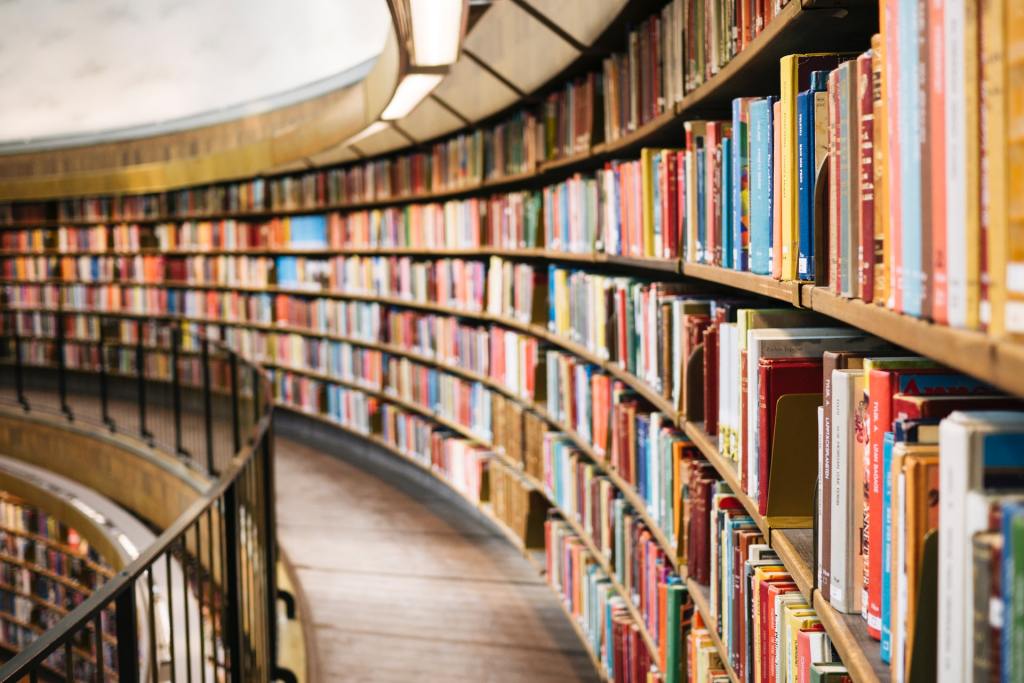
    Books on library shelves stretch around a curve
    One day I will be able to live in a bookstore. I bide my time waiting for that day. (Photo by Susan Q Yin on Unsplash)

    I read a lot of books and over the past several years I have tried to be more mindful of the authors I read and the stories I seek out. This first started with a concerted effort to read more women authors and has grown into reading more authors of color and LGBTQ authors.

    Despite strides made in recent years to publish a more diverse range of books, publishing as a whole remains predominately white. This can cause a lot blind spots and weirdness and I’m glad those are being addressed and called out. At the same time, the progress can be frustratingly slow.

    I’m thrilled that the book landscape is changing. And I love nothing more than a critical look at the so-called “literary canon” students have been taught forever. Do we really all need to be reading Charles Dickens still?

    In 2020, a lot of anti-racist reading lists were going around, and people started pointing out that you can’t just read your way out of a problem. That’s definitely true. But I think it’s worth celebrating different kinds of stories and taking the time to look for typically marginalized voices. That’s why I’m throwing together a little reading list in honor of Pride Month and Juneteenth. I myself am a straight white lady living in the suburbs, so if you want to gets your recs elsewhere, I get it. But you might find something you want to check out below!

    The Broken Earth Trilogy by N.K. Jemisin

    Genre: Fantasy

    I basically force everyone I know to read these books. I am an unending hype person for the trilogy, which I typically try not to do with books because then it makes people feel awkward if they don’t love them too. But I can’t help it. Basically from the moment I started reading The Fifth Season, these books set my hair on fire.

    This story takes place on a planet that is not our Earth. It is undergoing an apocalypse (more or less an extinction event that the people on the planet call a fifth season). A huge rift has opened up on the planet and things are not looking great. We follow a woman named Essun, who has the ability to control tectonic forces and is trying to find her daughter. She’s part of a small class of people who can effect the earth and are marginalized and hated for it. (If you get mad and cause an earthquake that kills people, that’s not great.)

    On top of that, there are all sorts of fantastical elements at play. Creepy Guardians who seek to control this underclass, rock eaters, mysterious floating obelisks in the sky. And at some point you realize there’s no moon and is it a myth or is it real and it wandered off???

    The action in these books is great, but the characters are so fantastic and the world is so complete. Plus, a bunch of mysteries get raised and then addressed in super satisfying ways down the road. Read these books!

    Warning that there is a lot of death and violence and oppression so reading these books does not always feel good. And if you can’t handle that right now, it’s okay.

    The Changeling by Victor LaValle

    Genre: Horror/Fantasy

    I had a few small gripes with this book (like how quickly the birth scene happened, but that’s sort of a personal bugaboo of mine), but overall it’s very compelling. Just take the basic premise that your wife becomes convinced that your infant son has been replaced by a changeling. She becomes so insistent that finally she acts on this belief, killing your son (who she thinks is really not your son) to get the real version back.

    And then stuff gets weirder from there!

    The actions that surround the changeling baby are really traumatic to read, but the book is making all sorts of observations about the horror and trauma of parenting and relationships and being believed. It is a ride worth taking.

    Red, White & Royal Blue by Casey McQuiston

    Genre: Romance

    The first time I read this book, I was sick, and spent the entire day lying on the couch and absolutely devouring this book. It is super charming! Sometime in the last year or so, I picked it up again and took maybe 24-48 hours longer to read it, but still crammed it down as fast I could.

    It’s not perfect, but you know what, I love it for that. The characters are super earnest and the love story is very sweet and ultimately everyone is trying to come to terms with who they are and how they present themselves to the world. I don’t think it’s a spoiler to say this book has a happy ending and sometimes you just need a happy ending, dang it.

    The set up is catnip for me. The son of the first woman president has a sort of pseudo-feud going on with an English prince. They’re forced to pretend to be friends for PR reasons and then, you know, feelings happen.

    Fake dating is absolutely one of my favorite tropes that exists on this earth. I am a sucker for it every time. And the fake friendship bit really falls close enough that I can’t resist it.

    I will say that all the characters are very quippy! At times it feels a little like the author watched too much of The West Wing (no judgement). I personally like this, but just a head’s up if you don’t like constant quippy cleverness.

    This Is How You Lose the Time War by Amal El-Mohtar and Max Gladstone

    Genre: Science fiction

    I believe that this one is short enough to be classified as a novella. So not only is it wonderful, but it won’t take up too much of your time!

    I love this book. It is exactly my jam. Two agents on opposite ends of a time war leave each other missives in all sorts of weird places across space and time. And I am talking like, you chew on a seed and get the letter that way kind of weird places.

    The creativity of the different settings is so fantastic and the way these characters start realizing that their dedicated antagonism has started giving them deeper connections than they intended is quite delightful. It helps if you like books largely composed of letters.

    Just Mercy: A Story of Justice and Redemption by Bryan Stevenson

    Genre: Non-fiction

    I can’t tell if everyone in the world knows about this book or if it just seems like everyone in the world knows about this book. So its inclusion on this list might not be that creative, but it’s still well worth the read. It’s super important to be aware of the biases and deep flaws in the American justice system and this book really highlights them.

    You have a through story about a man who was wrongfully convicted of murder and spent many years on death row, which in and of itself is worth the read, but then Stevenson gives us more. In addition to the main story, you will read about other people and other cases that highlight other types of injustice in the system. Just last week I read about a man in a Missouri prison who was originally convicted to life without parole at sixteen until the Supreme Court ruled that convicting minors to life without parole was unconstitutional. Bryan Stevenson worked on this issue!

    I try to stay informed about this kind of stuff and my jaw still hit the floor multiple times throughout the book. I highly recommend it.

    The Vanishing Half by Brit Bennett

    Genre: Literary fiction

    I loved this book. It’s a fascinating character study, and I drank in every word. If you are a person who loves plot, this is probably not the read for you. But if you like the idea of following the lives of two women who grew up as twins in the same small town before parting ways for good and then also exploring the lives of their daughters, you might want to check it out. I should also mention that these characters are light-skinned black women and one of them manages to change her life by leaving behind everyone she knows to pass as white.

    The issues of race, gender, and sexuality in this book are all explored in interesting ways, but ultimately, it came down to the characters for me. I loved following them, getting to know them, learning about what went on in their heads. And that’s really what the book is about. People being people.

    Boyfriend Material by Alexis Hall

    Genre: Romance

    The summary of this book mentioned fake dating and I was immediately in (see above).

    Two men decide to fake date because they think it will help them both out somehow. Does their weird logic make a whole lot of sense? Not really! Is that one of the reasons fake dating plots are so great? Pretty much!

    I will never tire of two people pretending to date and then actually falling for each other. I just won’t.

    Not to mention the lead characters are fun and their chemistry is good and you really just root for them and want that happy ending to happen. I have been seriously considering rereading this one just because it gave me so many feel goods the first time around.

    Also one of the main characters is a vegetarian and I appreciate that.


    There you have it! I tried to pick books of different stripes to give everyone something. There are so many more, of course, but I’ve already rambled long enough. Drop your own recs in the comments if you like. My to read list gets worried if it drops too far below 100 or so.

  • My favorite Shakespearean couples

    My favorite Shakespearean couples

    A man plays a tuba in an alley next to a colorful mural of Shakespeare.
    I don’t know why tuba playing and this Shakespeare mural go so well together, but it’s a great match. (Photo by Jessica Pamp on Unsplash)

    I have been a Shakespeare nerd for many years. Ever since middle school, in fact, when I decided one day for basically no reason that I was about the Bard. I toted around an edition of the complete works my dad had used in college and thought it made me deep or something. But then we went to see A Midsummer Night’s Dream on a field trip and my Shakespeare appreciation got much less theoretical. I realized that the plays were actually good and not just something to pretend to be an intellectual about.

    My exploration of my favorite Shakespearean couples is an exercise in dedicated intellectual rigor. (Much like my list of which Jane Austen heroes I would date.) Please know I take this very seriously.

    Beatrice and Benedick

    The Play: Much Ado About Nothing

    I mean, how can you not love Beatrice and Benedick? There is so much to love! Here, I have bullets:

    • They are the best part of this play
    • Their repartee is genuinely hilarious
    • They would actually make a decent couple in real life
    • Hostilities turned to love is a great trope

    Highly recommend you watch the movie version of this starring Kenneth Branagh and Emma Thompson. It is so delightful.

    Antony and Cleopatra

    The Play: Antony and Cleopatra

    Can the Romans handle the drama of one of their own being in a relationship with an Egyptian? (Spoiler alert: No, they cannot.)

    I like Antony and Cleopatra because they are a little older, have been together for awhile, and then decide to partially conquer the world together. Couple goals, honestly. Also, there’s a little tidbit in this play I have always loved about Antony dressing up in some of Cleopatra’s clothes. Like a fun, sexy couple’s game. The uptight Romans are horrified by this. They are fools. This is a great detail!

    Antony sucks to his wife and the fact that she agrees to raise the children he had with his mistress makes Octavia a true queen.

    Mercutio and Benvolio

    The Play: Romeo and Juliet

    Forget Romeo and Juliet. I have eyes only for Mercutio and Benvolio. This is not a relationship that is explicitly written into the play, although when viewed from a certain angle, I think it’s implied. Mercutio and Benvolio seem to end up on stage just the two of them talking quite a lot. Benvolio drags Mercutio offstage for his death scene (a tearful goodbye between lovers???) and after he announces Mercutio’s death, Benvolio disappears. I personally think Benvolio goes into hiding somewhere and writes lots of sad poetry.

    I am telling you, there’s a great love story in Romeo and Juliet and it has nothing to do with the title characters.

    Plus, Mercutio is funny and Romeo is boring. Case closed.

    Sebastian and Antonio and Olivia (and Viola and Orsino)

    The Play: Twelfth Night

    A girl twin and a boy twin are separated. The girl twin cross dresses and gets mistaken for a boy! Everyone is falling in love with everyone else. It’s so confusing and fun!

    Antonio is definitely in love with Sebastian. Viola is in love with Orsino and he seems to be digging her but thinks she’s a boy and so can’t admit he likes her until he finds out that she’s a she. Olivia falls in love with the boy version of Viola, but then marries Sebastian thinking he’s his sister. (Confused yet?)

    Personally, I think the best case scenario for this whole thing is for all five of these characters to be in love with each other. Except for the twins. They should not be in love with each other. That would be weird.

    Nick Bottom and Himself

    The Play: A Midsummer Night’s Dream

    This dude is obsessed with himself to the point where the fairies give him a donkey head because he is such an ass (get it????). These shenanigans are hilarious and Bottom and the players are hands down the funniest part of this play.

    There are so many couples in this play but the only guaranteed to make it is Bottom’s sweet sweet infatuation with himself.

    Iago and Villainy

    The Play: Othello

    Iago is a top tier villain because he is so fun and everyone in this play is so easy to trick. Like, he gives a dude a handkerchief and Othello has a full on meltdown. And Iago just spends the whole play turning to the audience and being like, “I’m gonna go try to screw up this guy’s life now.”

    Chef’s kiss, Iago. Please continue your nefarious ways.

    Leontes and My Fist

    The Play: A Winter’s Tale

    Hoo boy, does Leontes suck. This man causes a lot of death and horror all because he randomly gets jealous of his wife talking to his friend? What is your deal, Leontes?

    If I could punch him in the face, just once, I believe it would be destiny. True love.

  • Reading while exhausted: why I love audiobooks

    Reading while exhausted: why I love audiobooks

    Ever since I learned how to read, it’s been one of my favorite ways to spend the time. My mom likes to recall that when I was a little kid and I would go up to my room with a stack of books, close the door, and read for hours. I remember staying up past my bedtime with a lamp on until I got a warning knock on the door. Saturday mornings, I would wake up and immediately start reading, staying in bed as late as I could get away with.

    Let’s not even get started about the hours of sleep I’ve lost staying up too late with a book I couldn’t put down. (Now that I get woken up on a nightly basis, I mourn the lost hours. I should have appreciated the sleep while I could still get it.)

    I was expecting it to be harder to read once I had kids. And it definitely is. You can’t just pick up a book on a weekend afternoon whenever you feel like it. There’s no way in hell you’re going to stay in bed until 10 just reading. And once the kids are asleep? Good luck having two brain cells left to rub together.

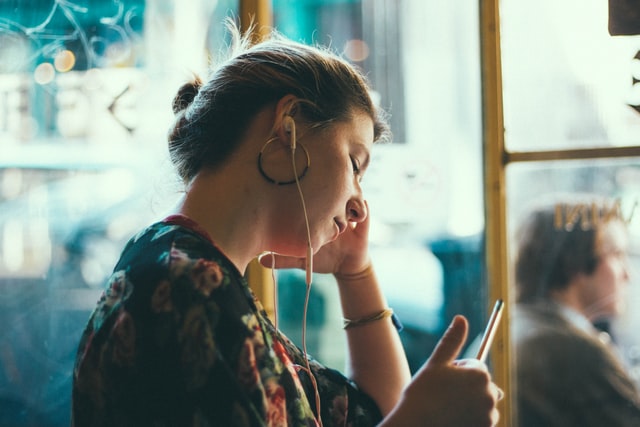
    Woman looks tiredly at her phone with earbuds in her ears.
    So very, very tired. (Photo by Siddharth Bhogra on Unsplash)

    Enter audiobooks.

    If you want to read, but you’re an exhausted parent (or really just a regular exhausted person with a busy schedule), I cannot recommend audiobooks enough. If you read fast, audio might be slightly less efficient for you, yes. But an audiobook diet will keep you from looking up at the end of the year and realizing the only things you successfully read for fun were articles about your kid’s developmental milestones or reviews of movies you’re definitely too tired to watch.

    The main selling point for me is I can listen to an audiobook while I do other chores around the house. All the repetitive, mundane tasks that must be done every day can be enhanced with books.

    I know a lot of people like to listen to music or the news or podcasts while they’re doing these kinds of tasks. And I listen to all those things occasionally too, but I’ve discovered that what nurtures my soul the most is busting through my to read list. (It must be said at this point: yes, listening to audiobooks is reading. Please don’t make me enter this debate.)

    My favorite activities for reading audiobooks:

    1. Washing dishes/washing and filling endless cycles of bottles – My least favorite chore of all time, made tolerable by books. (Pro tip: Use earbuds or the rushing water will drown out the sound.)
    2. Folding and putting away laundry – Words cannot describe how greatly this task is enhanced when you don’t have to think about how much laundry you will be folding and putting away for the next five years of your life.
    3. Driving to the store – Grab twenty minutes of alone time by volunteering to pick up a curbside order and think about something that isn’t how to force your toddler to eat dinner.
    4. Going on a walk/run – I’m one of those weirdos who prefers to run to books instead of music, but it is an amazing motivator to try to work out so you can read at the same time!
    5. Trying to sleep – This one is tricky because you don’t want to actually fall asleep while the book is going. But if your mind is racing or stress is keeping you up, this is one way to crowd out the noise.

    Some books don’t translate amazingly to audio, but many do. A good narrator can make a book. I love people with soothing voices or who somehow transform into the main character for me. Audio also helps teach me how everyone’s names are pronounced, which can be super helpful.

    Now at the end of the day, I don’t have to deal as much with falling asleep in the middle of the same paragraph ten nights in a row. Or experience the dreaded flip side of reading “one more chapter” until it’s past midnight and I curse my very existence.

    The past few years, more than half the books I’ve read each year have been audio. I wouldn’t have been able to fill the gap with print books. Which means I’d be missing out on 50% of my reads! And some of my favorite books from the past few years have been in audio form, which means I could have missed out on some really awesome writing.

    An audiobook fan yourself looking for some reads? I got you!

    Here are some of my favorite listens from the past year:

    • The Invisible Life of Addie LaRue by V.E. Schwab
      • A woman makes a deal with a god to extend her life, but in return, nobody she meets can remember her. I loved this for a whole host of reasons including historical settings, testing the boundaries of a magical curse, pondering the meaning of life, just to name a few.
    • The Vanishing Half by Brit Bennett
      • Two sisters grow up in the town of Mallard, founded by and for Black people with light skin. They cut and run as teens. Later, one sister returns with her daughter and the other sister disappears after working at a job where she passed as white. This book does not have a lot of action, but I loved the deep dives into every single character.
    • Just Mercy by Bryan Stevenson
      • You’ve probably seen this recommended all over the place, but it’s really good and worth checking out! Especially if you want to be more informed about America’s criminal justice system and how people of color are disproportionately affected by it. Thinking about the number of innocent people on death row is terrifying.
    • The Memory Police by Yoko Ogawa
      • The government keeps getting rid of things, like hats, and all the people who live on the island are forced to forget those things. The amount they are forced to forget continues growing to disturbing new levels. This is such a strange little book and if I had been reading it in print, I’m not sure where I would have landed on it. But having the narrator to gently lead me through it really worked for me.
    • Little Fires Everywhere by Celeste Ng
      • A woman and her daughter show up in town and start shaking up the other characters’ comfortable suburban lives. I thought Ng did a masterful job helping you empathize with all the characters in this book. You get to understand where almost everyone is coming from and really understand how complicated they all are. It also explores a lot of tough issues without being preachy about them!

    Let me know if you have any favorite audiobooks yourself! If you want to try audiobooks out but don’t want to subscribe to a paid service, check out your local library. Most have tons of options at this point.

  • Would I date Mr. Darcy?

    Would I date Mr. Darcy?

    I can only ever hope to look this cute and playful while reading Jane Austen. (Photo by Dexter Fernandes on Unsplash)

    He’s tolerable, I suppose, but not handsome enough to tempt me.

    But to be fair to Mr. Darcy, is it really worth it to try to date any of the men in Jane Austen novels? The books are a delight, and I find some of the relationships to be wonderful. But Mr. Darcy as relationship material? I’m not so sure.

    Here’s a brief look at how Jane Austen heroes stack up in my mind and whether they’re worth dating. (Note: This list is not complete. I haven’t read all Austen’s work, so I can’t comment on whoever from Mansfield Park. Sorry?)

    Fitzwilliam Darcy

    Perks:

    • He has a lot of money.
    • He is nice to his sister.
    • He’s a dick, but he’s honest about his dickishness.
    • He has lovely curly brown hair (probably just thinking about Colin Firth now).

    I know, I know. The whole thing about Darcy is that he seems to be an unbearable prick but is actually a decent dude. But he seems like a lot of work. You’d have to really drag his feelings out of him and that seems exhausting. Also, he’s prone to making snide remarks, and so am I. Most of our relationship would probably just be saying really rude things to each other.

    If I were to choose a man from Pride and Prejudice to date, I think I’d lean Mr. Bingley. Super earnest, nice, willing to show affection toward women. Plus, I love it when he tells Darcy “I hate to see you standing about in this stupid manner” and “I wouldn’t be as fastidious as you are for a kingdom.” Yes, Bingley. Give him what for. Downside? The Bingley sisters are unbearable. So maybe not.

    Captain Frederick Wentworth

    Perks:

    • He’s a captain, I guess?
    • Doesn’t hold much of a grudge.
    • Willing to be friendly with you even if there’s an awkward break up.

    There’s a lot to like about Persuasion. It’s a weird little book that grows on me the more I think about it. I like that there’s a heroine a little more advanced in age and so more in line with modern sensibilities. I also like that Anne made a pretty huge error that she regrets. There’s something to be said about second chances and the quiet pensive feel of this novel.

    So what is a Went really worth? More than any of the other jackasses in this book. Yeah, I’d probably date him. Even if his life, his love, and his lady are the sea.

    Henry Tilney

    Perks:

    • His family has a super weird creepy house.
    • He actually reads and will talk books with you.
    • Will back your play and stand up to his dick dad.

    Who has even read Northanger Abbey, seriously. I mean, I’ve read it twice and at the same time, somehow, have never read it. Let’s just agree we have another book full of assholes and at least Henry can be, like, a nice dude. I’d probably date him just so I could try to see a ghost in the family manor, honestly.

    Edward Ferrars

    Perks:

    • Uh.
    • Hmmm.

    I just love Emma Thompson, okay. Don’t think I’d date Ferrars.

    George Knightley

    Perks:

    • He sees the value in being kind to people.
    • He’s willing to humor your weird relatives.
    • He goes on lots of walks.
    • He will, in fact, call you on your bullshit.

    I don’t hate Knightley, but ultimately, I don’t think he’s my jam. All the characters with money in Emma are a little much for my tastes. Also, he’s like 20 years older than Emma or something and I know it was the times or whatever, but comes off a little weird for my tastes. Rein it in, Knightley.

    Emma is a book rife with terrible men for dating. Mr. Elton and Frank Churchill being prime examples of suck. If you gotta go for a guy in this outing, it is definitely Robert Martin. I would 100% date and marry Robert Martin. He is the most dateable man on this list. A hill I will happily die on.

    In Conclusion

    Jane Austen writes a good book. Her characters are sharp and because she keeps an eye toward social commentary, many of them are entertaining but also huge jerks. The leading men in these books can be charming at times and impossible at others. But in the end, you probably wouldn’t want to date a guy who was raised in the 1800s. He’d probably have appalling opinions.

    Except Robert Martin, of course.